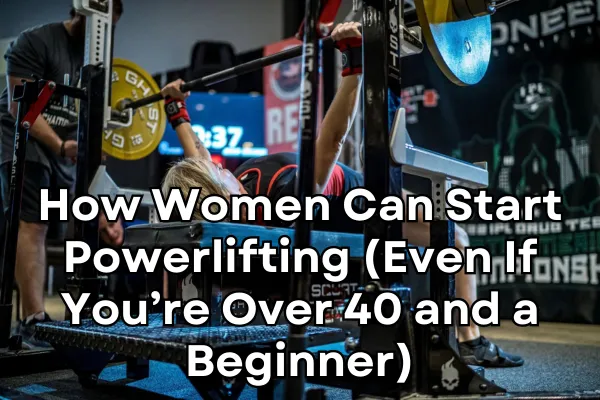
How Women Can Start Powerlifting (Even If You’re Over 40 and a Beginner)
If you spend any time in the gym, you have probably seen someone squatting, benching, or deadlifting heavy weight and thought:
“Is that powerlifting?”
And maybe you’ve also wondered:
“Could I actually do that?”
Most women avoid lifting heavy because they were told it’s dangerous, masculine, or not meant for them. For decades, women have been encouraged to exercise primarily to lose weight or get smaller.
Powerlifting flips that entire narrative on its head.
Powerlifting is about building strength, confidence, and capability.
And the truth is, women often thrive in this sport.
👉🏻 You do not need to be young.
👉🏻 You do not need to be naturally strong.
👉🏻 And you definitely do not need to look like an athlete before you start.
In fact, I started lifting in my late 30s and went on to set national and world records in powerlifting after the age of 40.
If you’re curious about powerlifting, this guide will walk you through:
What powerlifting actually is
Why lifting heavy is incredibly valuable for women
The biggest myths that hold women back
How to get started safely and confidently
What competing in powerlifting looks like
Let’s get into it.
What Is Powerlifting?
Powerlifting is a strength sport centered around three main lifts:
Squat
Bench Press
Deadlift
In competition, athletes perform all three lifts and attempt their heaviest successful weight for 1 rep in each one. The highest successful rep in squat, bench press, and deadlift are added together to create your total.
The person with the highest total in their weight and age class wins.
That’s it. No complicated routines. No aesthetic judging. Just strength.
The Three Powerlifting Lifts Explained
The Squat
The squat begins with the barbell on your upper back. You sit your hips back and bend your knees until your hip crease goes below the top of your knee. Then you stand back up with the weight.
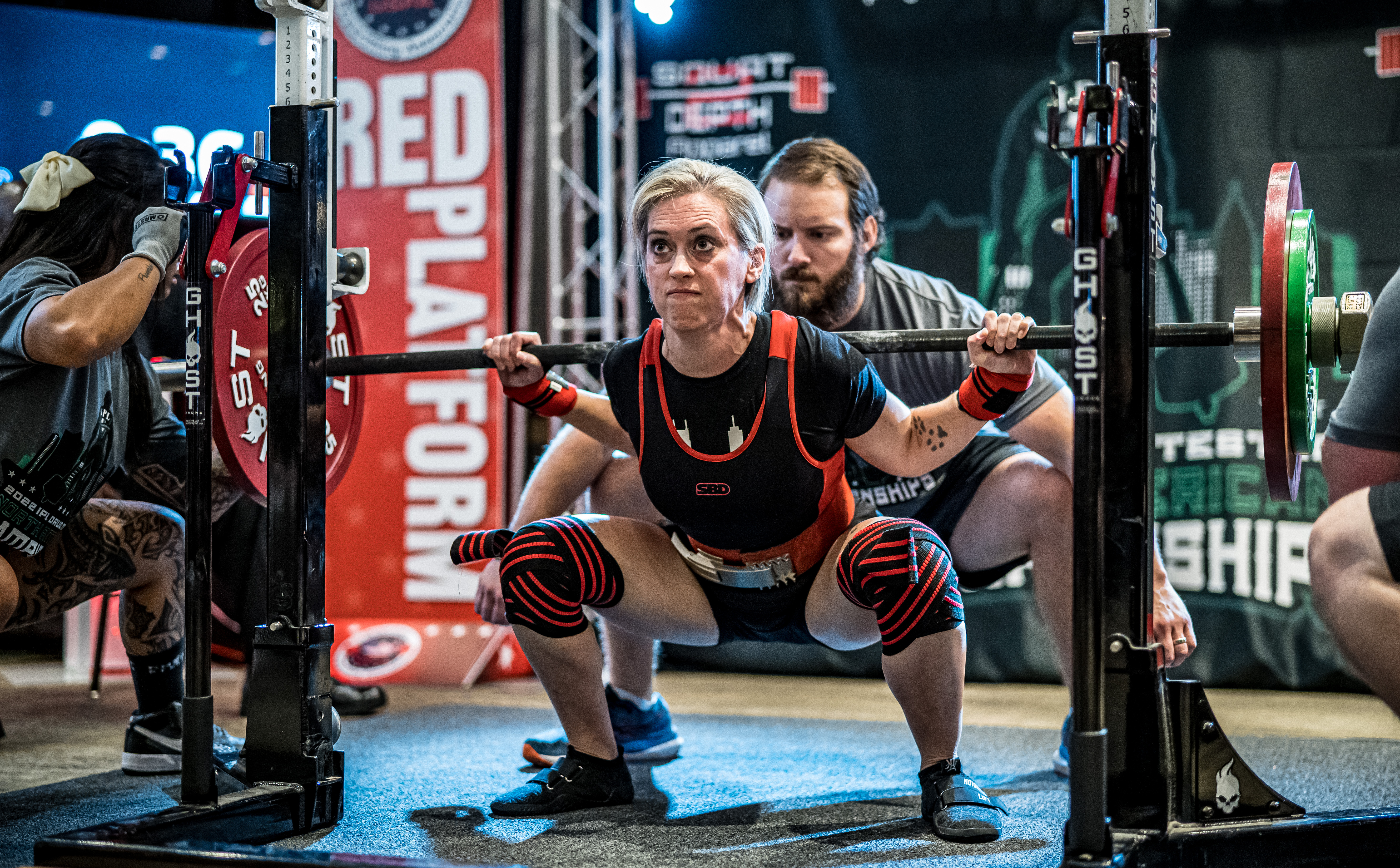
Squats train:
Glutes
Quads
Hamstrings
Core
Back
Squats are also one of the most useful real-world movements. Sitting down and standing up is a movement you will perform thousands of times throughout your life.
...and nobody wants to get old and need help getting off the toilet!
The Bench Press
The bench press is performed lying on a flat bench while lowering the bar to your chest and pressing it back up.
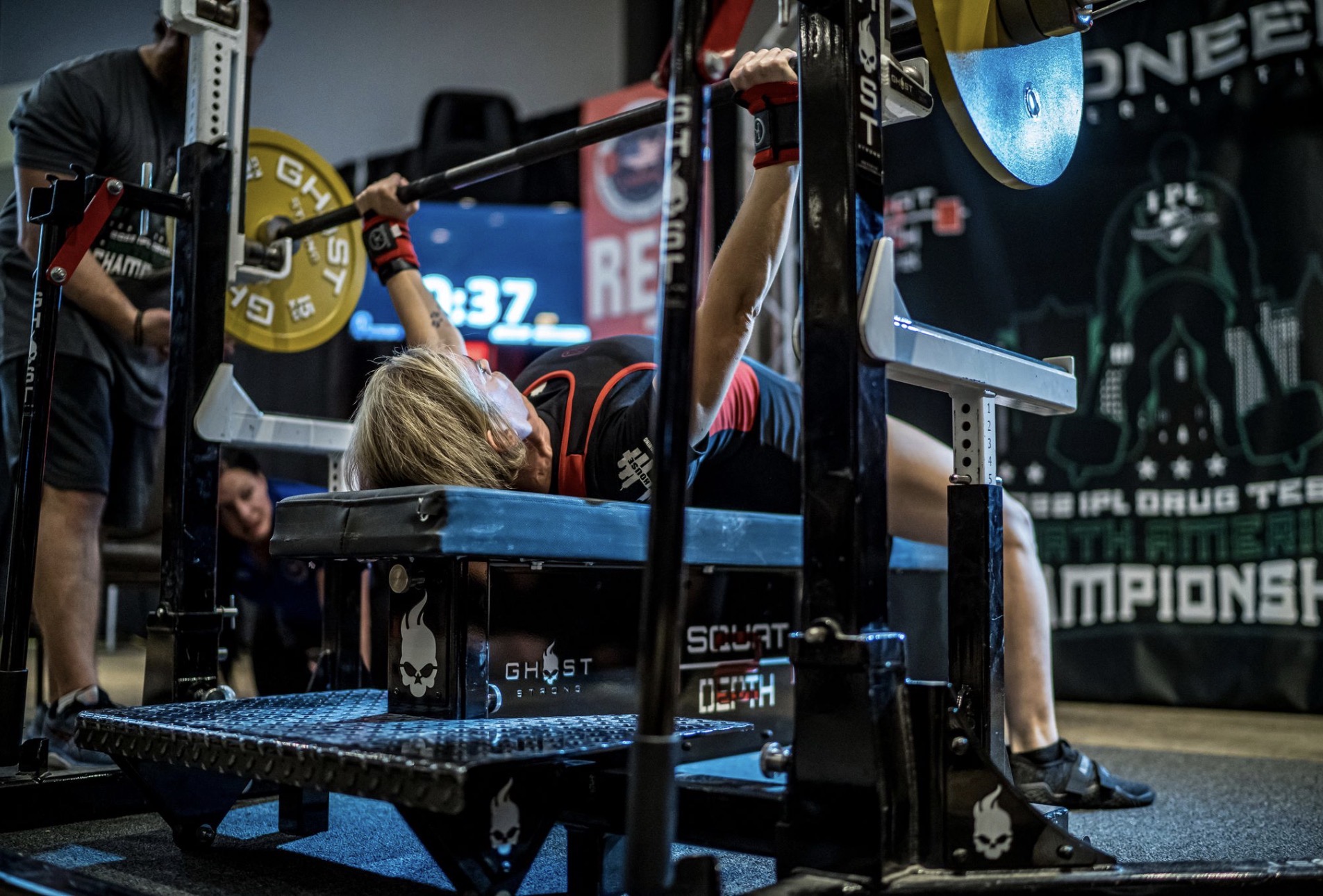
This lift primarily trains:
Chest
Shoulders
Triceps
Upper back
Upper body strength is something many women have been discouraged from developing. But building pressing strength helps with everyday tasks like pushing doors, carrying groceries, carrying kids and pets, and maintaining shoulder health.
The Deadlift
The deadlift involves lifting a barbell from the floor until you are standing upright.
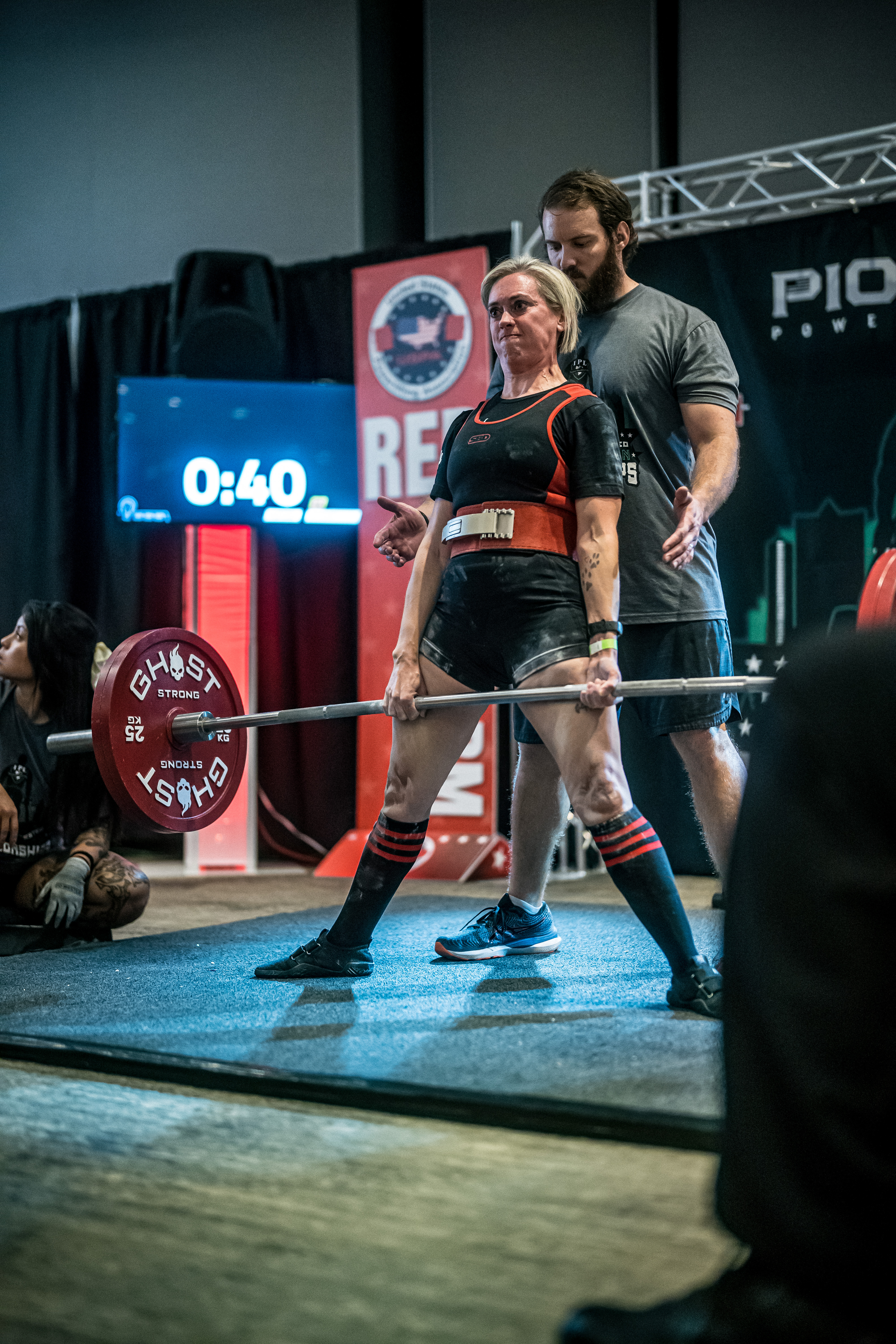
Deadlifts train:
Glutes
Hamstrings
Back
Core
Grip strength
It is one of the most powerful full-body strength movements you can do.
Learning how to hinge and lift properly is also extremely valuable for preventing injuries in daily life.
👉🏻 Contrary to what many people think, deadlifting is NOT dangerous.
Wanna know what's dangerous? Having a weak back.
Why Strength Training Is So Important for Women
Strength training is not just about lifting heavy weights in a gym. It plays a major role in long-term health, independence, and quality of life.
And for women, it becomes even more important as we age.
Muscle Loss Happens With Age
Starting around age 30, adults begin to gradually lose muscle mass in a process called sarcopenia.
Without resistance training, this muscle loss accelerates as we get older. This leads to reduced strength, slower metabolism, and increased risk of falls and injury.
Strength training is one of the most effective ways to slow and even reverse this process. The National Institute on Aging consistently recommends resistance training as a key strategy for preserving muscle and physical function as we age.
Building muscle now helps protect your body decades from now.
Bone Density Matters
Women face a significantly higher risk of osteoporosis as they age.
Lifting weights places mechanical stress on bones, which stimulates the body to increase bone density. Research shows resistance training can improve or maintain bone health and reduce fracture risk.
This becomes especially important during perimenopause and menopause when hormonal changes can accelerate bone loss.
Strength Supports Metabolic Health
Muscle tissue is metabolically active. The more muscle you carry, the more energy your body requires to maintain it.
Strength training also improves insulin sensitivity and supports long-term metabolic health.
But beyond metabolism, muscle simply makes life easier.
Strong muscles allow you to move through the world with more confidence and less physical limitation.
👉🏻👉🏻 EVERYTHING is easier when you're strong.
Strength Supports Independence
One of my favorite questions to ask women is this:
Do you want to be able to carry your own luggage when you’re 75?
Strength training is one of the best tools we have for maintaining independence later in life.
Powerlifting simply provides a structured, motivating way to pursue that strength.
My Powerlifting Story
I did not grow up strong.
When I started lifting weights at 38, I was overweight, weak, and uncomfortable in my own body. A friend introduced me to strength training and encouraged me to increase my protein intake.
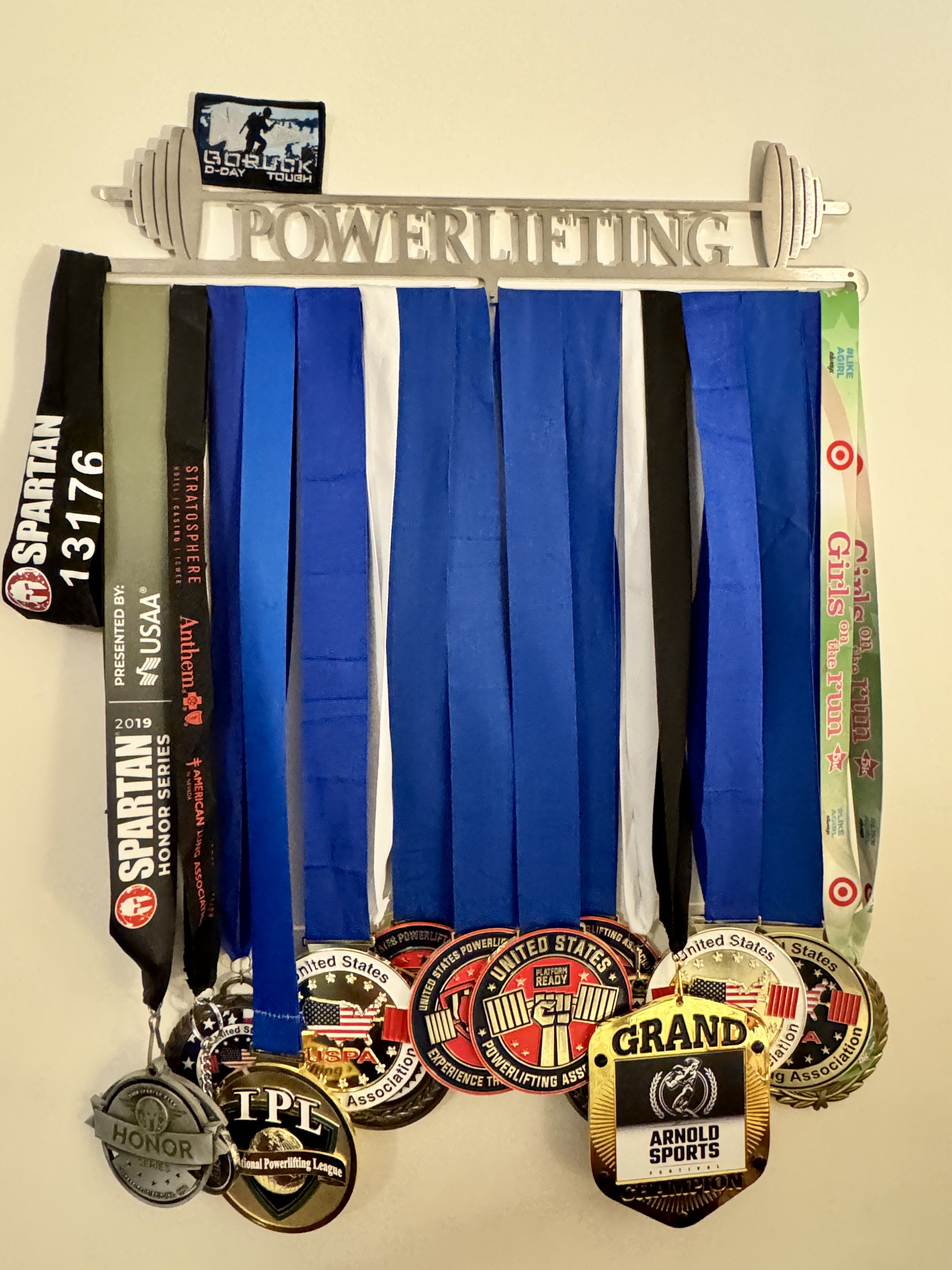
Over time, something incredible happened.
I started to feel capable.
I began competing in powerlifting and quickly fell in love with the process of getting stronger.
What surprised me most was when the medals started coming. Every single one of my powerlifting medals was earned after the age of 40.
National records. World records. All after the age when many women are told they are “too old” to start something new.
Powerlifting did not just change my body. It changed how I saw myself.
And that is something I now get to help other women experience.
Common Myths About Women Lifting Heavy
Despite the growing popularity of strength training, a lot of misinformation still circulates around women and heavy lifting.
Let’s clear a few things up.
Myth 1: Does Lifting Heavy Make Women Bulky?
This is probably the most common fear women express.
The reality is that building significant muscle mass requires years of intentional training, a calorie surplus, and often genetic predisposition.
Women naturally produce much lower levels of testosterone than men, which makes large amounts of muscle gain far more difficult.
Most women who lift heavy simply become stronger, more toned, and more confident.
Check out this blog article to learn more:
Can Women Get Bulky From Lifting Weights?
Myth 2: Is Heavy Lifting Dangerous?
When taught properly, strength training is extremely safe.
In fact, research shows resistance training has a lower injury rate than many popular sports, including running and soccer.
Like any skill, proper technique matters. Learning good movement patterns and progressing gradually helps reduce injury risk.
Check out this blog article to learn more:
Is Powerlifting Safe for Beginners?
Myth 3: Am I Too Old to Start?
Strength training benefits people at nearly every age.
Research has shown adults in their 60s, 70s, and even, yep, beyond age 100 can increase muscle mass and strength through resistance training!
If anything, starting later in life makes strength training even more important.
Check out this blog article to learn more:
Strength Training for Women Over 40
How to Start Powerlifting
If powerlifting sounds interesting, the good news is that getting started is actually pretty simple.
You do not need special equipment, expensive programs, or elite athletic ability.
You just need a plan.
Learn the Main Movements
The first step is learning the basic movement patterns for:
Squat
Bench press
Deadlift
These are skills. Like any skill, they improve with practice.
Working with a qualified coach can help you build good technique early and reduce frustration.
Start With Manageable Weights
Beginners often think they need to start heavy right away.
You do not. And, really, you SHOULD not.
Start with weights that allow you to move well and build confidence. Strength develops gradually through progressive overload. That simply means gradually increasing the challenge over time.
Train Consistently
Consistency matters more than intensity in the beginning.
For most beginners, training three to four days per week works very well.
A typical powerlifting-focused program includes:
Squat variations
Bench press variations
Deadlift variations
Accessory exercises for supporting muscles
This helps build a balanced, resilient body.
Focus on Building a Foundation
A strong foundation of movement quality and connective tissue strength is important before pushing very heavy weights. Beginners benefit from learning technique, gradually increasing workload, and building work capacity before advanced programming is introduced.
Think of the first phase of training as laying the groundwork for years of future progress.
What If You Want to Compete?
One of the fun things about powerlifting is that competition is optional.
Many people train in a powerlifting style without ever stepping on a platform.
"Powerlifting style" means training your barbell back squat, barbell bench press, and barbell deadlift with the intention of improving your 1 rep max... whether you do it on a competition platform or just in the gym.
But if you decide you want to compete, the process is fairly straightforward.
Powerlifting Federations
Powerlifting competitions are organized through different federations.
Some common federations include:
USPA
USAPL
PLU
SPF
Each federation hosts meets throughout the year in different locations.
You can usually find local competitions by visiting the federation website and searching for upcoming events.
Understand the Rulebook
Each federation has slightly different rules for things like:
Squat depth
Bench press commands
Equipment
Weight classes
Before competing, it is important to read and understand the rulebook for the federation you choose.
Most of the athletes I coach compete in USPA meets, but there are several good organizations depending on where you live.
Your First Meet
Your first powerlifting meet is not about winning.
It is about learning.
You will get three attempts for each lift and your best successful lift counts toward your total. The atmosphere is usually extremely supportive. Powerlifters tend to cheer loudly for everyone on the platform.
It is one of the most positive environments you will find in sports.
You’re Not Too Old. You’re Right On Time.
Women have spent decades being told to take up less space.
To weigh less.
Eat less.
Shrink themselves.
Powerlifting asks you to do the opposite.
Lift more.
Build more.
Become stronger than you thought possible.
And that strength does not stay in the gym.
It shows up everywhere else in your life.
If you are curious about trying powerlifting, you do not need permission. You just need a starting point.
And if you would like guidance, accountability, and a clear plan, you can learn more about my coaching services here:
👉 https://krispfit.com/services
Whether you train in person or online, my goal is simple.
Help you build a strong body that supports the life you want to live for decades to come.
Because one thing I know for sure is this:
You will never regret being strong but they day might come when you wish you were.
Want to read more about the truth of lifting heavy weights and if powerlifting is safe for beginners? Check out this blog post.
📩 Reach out to me and let’s get you started on your strong girl journey. You can email me at [email protected] or hit me up on Instagram here.
You will never regret being strong.


