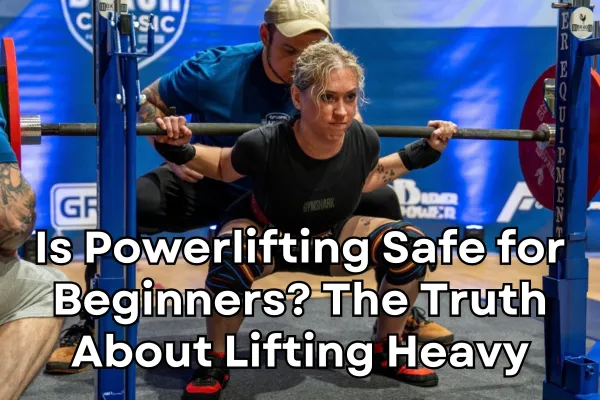
Is Powerlifting Safe for Beginners? The Truth About Lifting Heavy
Is Powerlifting Safe for Beginners?
This is one of the first questions women ask when they become curious about powerlifting.
And the concern makes sense.
If you’ve spent years hearing that lifting heavy weights is dangerous, intimidating, or only for elite athletes, the idea of putting a barbell on your back might feel overwhelming.
But here’s the reality.
Powerlifting is not inherently dangerous.
In fact, when done with proper technique and intelligent training, strength training has one of the lowest injury rates of many common physical activities.
That’s not opinion. That’s research.
And once you understand how powerlifting actually works, the idea that it’s “too dangerous” for beginners starts to fall apart pretty quickly.
What Powerlifting Actually Is
Powerlifting is a strength sport based on three primary movements:
Squat
Bench press
Deadlift
That’s it.
There are no complicated choreography routines. No extreme plyometrics. No high-speed movements.
Each lift is controlled, deliberate, and repeatable.
That’s one of the reasons powerlifting is so accessible for beginners.
The goal is simply to get stronger over time by gradually increasing the weight you lift.
The Injury Rate Might Surprise You
One of the biggest misconceptions about powerlifting is that heavy weights automatically mean higher injury risk.
But the research doesn’t support that.
Studies comparing injury rates across sports consistently show that strength training has a relatively low injury rate.
For example, a commonly cited review published in the Journal of Strength and Conditioning Research found:
Strength training injury rate: roughly 1–4 injuries per 1,000 hours of training
Compare that to:
Soccer: about 6–19 injuries per 1,000 hours
Running: about 2–12 injuries per 1,000 hours
Basketball: about 6–14 injuries per 1,000 hours
In other words, lifting weights is often safer than many sports people consider completely normal.
Why?
Because powerlifting movements are controlled and predictable.
There are no sudden collisions, sprinting cuts, or awkward landings.
Technique Matters More Than Weight
What actually determines injury risk in strength training is technique and progression, not the fact that weights are being lifted.
Every exercise is essentially a movement skill. Learning good technique helps distribute forces properly through the body and reduce unnecessary strain.
That’s why beginners should focus on:
learning proper movement patterns
starting with manageable weights
gradually increasing load over time
When those pieces are in place, the body adapts remarkably well to resistance training.
Muscles grow stronger.
Tendons become more resilient.
Bones become denser.
Your body literally becomes better built to handle force.
Strength Training Builds a More Resilient Body
One of the biggest ironies in the “lifting is dangerous” myth is that strength training is one of the best tools we have for injury prevention.
Strength training improves:
joint stability
connective tissue strength
bone density
coordination
balance
All of these factors help reduce injury risk both inside and outside the gym.
This becomes even more important for women as they age.
Resistance training is widely recommended by health organizations as a key strategy for preventing:
osteoporosis
falls
age-related muscle loss
Building strength now protects your body later.
Why Beginners Sometimes Get Hurt
When injuries do happen in strength training, they usually come from one of three situations.
Doing Too Much Too Soon
The most common mistake beginners make is trying to lift heavy immediately.
Strength takes time to build.
Your muscles adapt faster than connective tissues like tendons and ligaments, so gradually increasing load is important.
Progressive overload works best when it’s progressive, not rushed.
Poor Technique
Technique matters because it helps the body move efficiently and distribute force across multiple muscles.
This is one reason working with a coach can be helpful early on.
A good coach helps you:
learn proper form
identify movement limitations
build strength safely
Following Programs That Aren’t Designed for Beginners
Many beginner lifters try to copy programs written for advanced athletes.
That’s like learning to drive by entering a Formula 1 race.
Beginners benefit most from programs that prioritize:
technique practice
manageable training volume
gradual load progression
Building a strong foundation pays off for years.
Powerlifting Is Not Just for Elite Athletes
Another reason people assume powerlifting is dangerous is because they picture elite lifters moving enormous weights.
But competitive powerlifting includes many divisions, including:
novice lifters
masters lifters (age 40+)
different weight classes
You don’t have to lift record-breaking weights to participate.
Powerlifting simply gives people a structured way to measure and improve strength.
And beginners are welcome.
What Women Gain From Lifting Heavy
When women move past the fear and start lifting, they usually discover something surprising.
Strength training changes far more than physical strength.
Women who train consistently often gain:
Physical capability
You realize your body can do things you once thought were impossible.
Confidence
Lifting heavy builds a sense of competence that carries into other areas of life.
Bone and metabolic health
Strength training supports long-term health in ways that cardio alone cannot.
A new relationship with exercise
Instead of chasing smaller bodies, many women start pursuing performance and strength.
This shift is powerful.
Because women were never meant to be fragile.
They were meant to be strong.
The Bottom Line
Powerlifting is not dangerous when approached correctly.
Research consistently shows that strength training has a relatively low injury rate, especially compared to many popular sports.
When beginners focus on:
proper technique
progressive training
intelligent programming
powerlifting becomes one of the most effective ways to build a stronger, healthier body.
And strength built today pays dividends for decades.
Want to Learn How to Start Powerlifting?
If you’re curious about powerlifting but unsure where to begin, I walk through everything step-by-step in my beginner guide.
👉 https://krispfit.com/post/powerlifting
You’ll learn:
what powerlifting is
why strength training matters for women
how to start lifting safely and confidently
Because strength isn’t just for athletes.
It’s for any woman who wants a body that can support her life for years to come. 💪
Click here to read more about getting started with powerlifting - even if you're 40 or more years old!
📩 Reach out to me and let’s get you started on your strong girl journey. You can email me at [email protected] or hit me up on Instagram here.
You will never regret being strong but the day might come when you wish you were.


